What Is Digital Trust and Why It Matters More Than Ever (2026 Guide)
In today’s hyper-connected world, about each viewpoint of life—banking, communication, shopping, healthcare, and indeed governance—relies on computerized stages. As our reliance on innovation develops, so does the significance of computerized believe. But what precisely is computerized believe, and why has it ended up one of the most basic variables forming businesses and online encounters in 2026?
This comprehensive direct breaks down the concept of advanced believe, its center components, and why it has ended up fundamental for businesses, customers, and society as a whole.
What Is Computerized Trust?
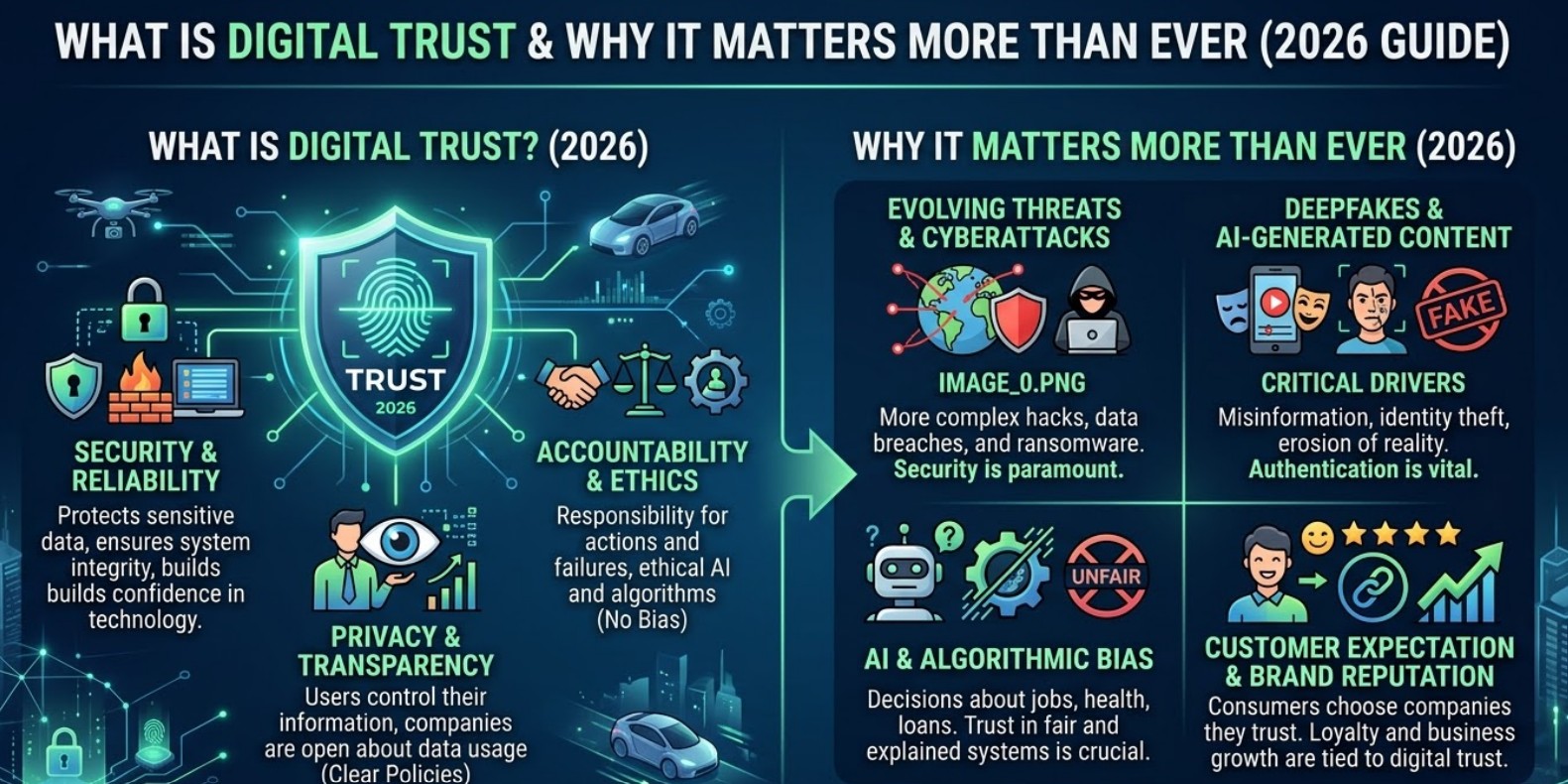
Digital believe alludes to the certainty clients have in organizations, frameworks, and innovations to safely and mindfully handle their information and advanced intuitive. It includes everything from information security and cybersecurity to straightforwardness and moral utilize of technology.
When clients believe a stage, they feel secure sharing individual data, conducting exchanges, and locks in with computerized administrations. Without that believe, indeed the most imaginative innovations fall flat to pick up adoption.
Why Computerized Believe Things More Than Ever
1. Hazardous Development of Advanced Ecosystems
From e-commerce stages to versatile keeping money apps and cloud administrations, computerized biological systems have extended quickly. Individuals presently store touchy data—financial subtle elements, individual recognizable proof, wellbeing records—online.
A single information breach can affect millions of clients right away. This makes advanced believe not fair vital, but mission-critical.
2. Rising Cybersecurity Threats
Cyberattacks are getting to be more modern, visit, and exorbitant. Ransomware, phishing, personality robbery, and AI-driven assaults are developing concerns.
Businesses that fall flat to prioritize advanced believe risk:
- Financial losses
- Legal penalties
- Reputation damage
- Loss of client loyalty
Organizations that contribute in security measures construct strength and believe simultaneously.
3. Information Security Concerns Are at an All-Time High
Consumers nowadays are more mindful than ever of how their information is utilized. Directions like GDPR and comparable systems around the world have strengthened the significance of privacy.
Users presently expect:
- Transparency in information collection
- Control over their individual information
- Clear assent mechanisms
Companies that regard these desires win long-term trust.
4. Believe Drives Income and Client Retention
Digital believe is specifically tied to trade victory. Considers reliably appear that clients are more likely to:
- Purchase from trusted brands
- Stay faithful to stages that secure their data
- Recommend secure administrations to others
In differentiate, a need of believe leads to higher churn rates and misplaced opportunities.
5. The Rise of AI and Automation
Artificial Insights is changing businesses, but it too raises concerns approximately predisposition, responsibility, and misuse.
Digital believe presently expands past security to include:
- Ethical AI usage
- Transparent algorithms
- Responsible automation
Users need confirmation that innovation works decently and predictably.
Key Columns of Advanced Trust
To get it advanced believe completely, it makes a difference to break it down into its center components.
1. Security
Security is the establishment of advanced believe. It includes securing frameworks, systems, and information from unauthorized get to and cyber threats.
Key components include:
- Encryption
- Multi-factor confirmation (MFA)
- Secure infrastructure
- Continuous monitoring
2. Privacy
Privacy guarantees that individual information is collected, put away, and utilized responsibly.
Best hones include:
- Data minimization
- User assent management
- Clear security policies
- Compliance with regulations
3. Transparency
Transparency builds validity. Clients need to know how their information is utilized and how choices are made.
Organizations should:
- Clearly communicate policies
- Explain AI choices where possible
- Disclose data-sharing practices
4. Reliability
Digital frameworks must perform reliably without disappointments or downtime.
Reliability includes:
- High uptime
- Fast performance
- Accurate information processing
5. Accountability
Organizations must take obligation for their activities, particularly when things go wrong.
This means:
- Prompt breach notifications
- Taking remedial actions
- Maintaining moral standards
Real-World Cases of Computerized Trust
E-Commerce Platforms
Online stores that utilize secure installment doors and secure client information construct believe and energize rehash purchases.
Banking and Fintech
Digital managing an account apps depend intensely on believe. Highlights like biometric confirmation and extortion location frameworks offer assistance clients feel secure.
Healthcare Systems
With touchy quiet information at stake, healthcare stages must guarantee strict security and security standards.
Social Media Platforms
Users anticipate stages to ensure their information and avoid abuse. Straightforwardness and substance balance play a major part in trust.
Benefits of Solid Computerized Trust
Organizations that prioritize advanced believe pick up a few competitive advantages:
1. Expanded Client Loyalty
Users adhere with brands they believe, decreasing churn and expanding lifetime value.
2. Higher Change Rates
Trust diminishes faltering, driving to more completed transactions.
3. Made strides Brand Reputation
A dependable brand stands out in a swarmed market.
4. Administrative Compliance
Adhering to protection laws decreases legitimate dangers and penalties.
5. Trade Growth
Trust quickens appropriation of unused advances and services.
Risks of Overlooking Computerized Trust
Failing to construct computerized believe can have genuine consequences:
- Data breaches and budgetary loss
- Negative exposure and harmed reputation
- Loss of client confidence
- Legal results and fines
- Reduced advertise competitiveness
In today’s environment, believe is not optional—it’s a necessity.
How Businesses Can Construct Computerized Trust
1. Contribute in Cybersecurity
Use progressed security apparatuses and frequently upgrade frameworks to avoid vulnerabilities.
2. Be Transparent
Clearly communicate how information is collected, put away, and used.
3. Prioritize Client Privacy
Give clients control over their information and regard their preferences.
4. Receive Moral Innovation Practices
Ensure AI and mechanization are reasonable, fair-minded, and accountable.
5. Teach Users
Help clients get it how to secure themselves online.
6. Normal Reviews and Compliance
Conduct security reviews and guarantee compliance with worldwide regulations.
The Future of Advanced Trust
As innovation advances, advanced believe will proceed to develop in significance. Rising patterns include:
- Decentralized personality frameworks giving clients more control
- Blockchain innovation upgrading transparency
- Zero-trust security models getting to be standard
- AI administration systems guaranteeing moral usage
Organizations that adjust to these patterns will lead the future of advanced innovation.
Final Thoughts
Digital believe is no longer fair a specialized requirement—it’s a center commerce methodology. In an period where information is money and innovation drives each interaction, believe decides victory or failure.
Businesses that prioritize security, straightforwardness, and moral hones will not as it were ensure their clients but moreover open unused openings for development.