The Ultimate Guide to the Best Cybersecurity Software for Small Businesses in 2026
If you run a small business in 2026, your digital infrastructure is the lifeblood of your operation. Whether you are managing cloud-based applications, operating high-traffic content sites, or handling sensitive customer data, the stakes have never been higher. Cybercriminals are no longer just targeting multinational corporations; they are actively deploying AI-driven attacks against small and medium-sized businesses (SMBs) because they often have valuable assets but weaker defenses.
A single data breach or prolonged period of downtime can devastate your brand’s reputation and completely wipe out revenue streams—especially if you rely on high-volume web traffic and optimized ad networks. Securing your cloud platforms, web domains, and employee endpoints is no longer optional; it is a critical cost of doing business.
Here is a comprehensive breakdown of the best cybersecurity software for small businesses in 2026, designed to protect your bottom line without requiring an enterprise-sized IT department.
The 2026 Threat Landscape: Why SMBs Need Enterprise-Grade Security
Before diving into the tools, it is crucial to understand what you are protecting against this year. The commercialization of artificial intelligence has given hackers new tools to automate sophisticated phishing campaigns, launch rapid zero-day exploits, and deploy ransomware at scale.
For digital entrepreneurs and small businesses, the risks are highly specific:
-
Cloud Vulnerabilities: As businesses migrate entirely to cloud infrastructure platforms, misconfigurations can leave massive data buckets exposed.
-
Uptime Disruption: Distributed Denial of Service (DDoS) attacks can take your website offline, instantly killing monetization efforts and eCPM optimization strategies.
-
Identity Theft: Compromised employee credentials remain the number one entry point for unauthorized access.
To combat these threats, your cybersecurity stack needs to be proactive, automated, and easy to manage.
1. Best for Endpoint Protection: CrowdStrike Falcon Go
Endpoints—laptops, desktops, and mobile devices—are the front doors to your business network. Traditional antivirus software is largely obsolete in 2026, replaced by Endpoint Detection and Response (EDR).
Why it wins: CrowdStrike has long been an enterprise heavyweight, but their “Falcon Go” tier is purpose-built for SMBs. It uses cloud-native, AI-driven behavioral analysis to stop breaches before they execute, rather than relying on outdated malware signatures.
-
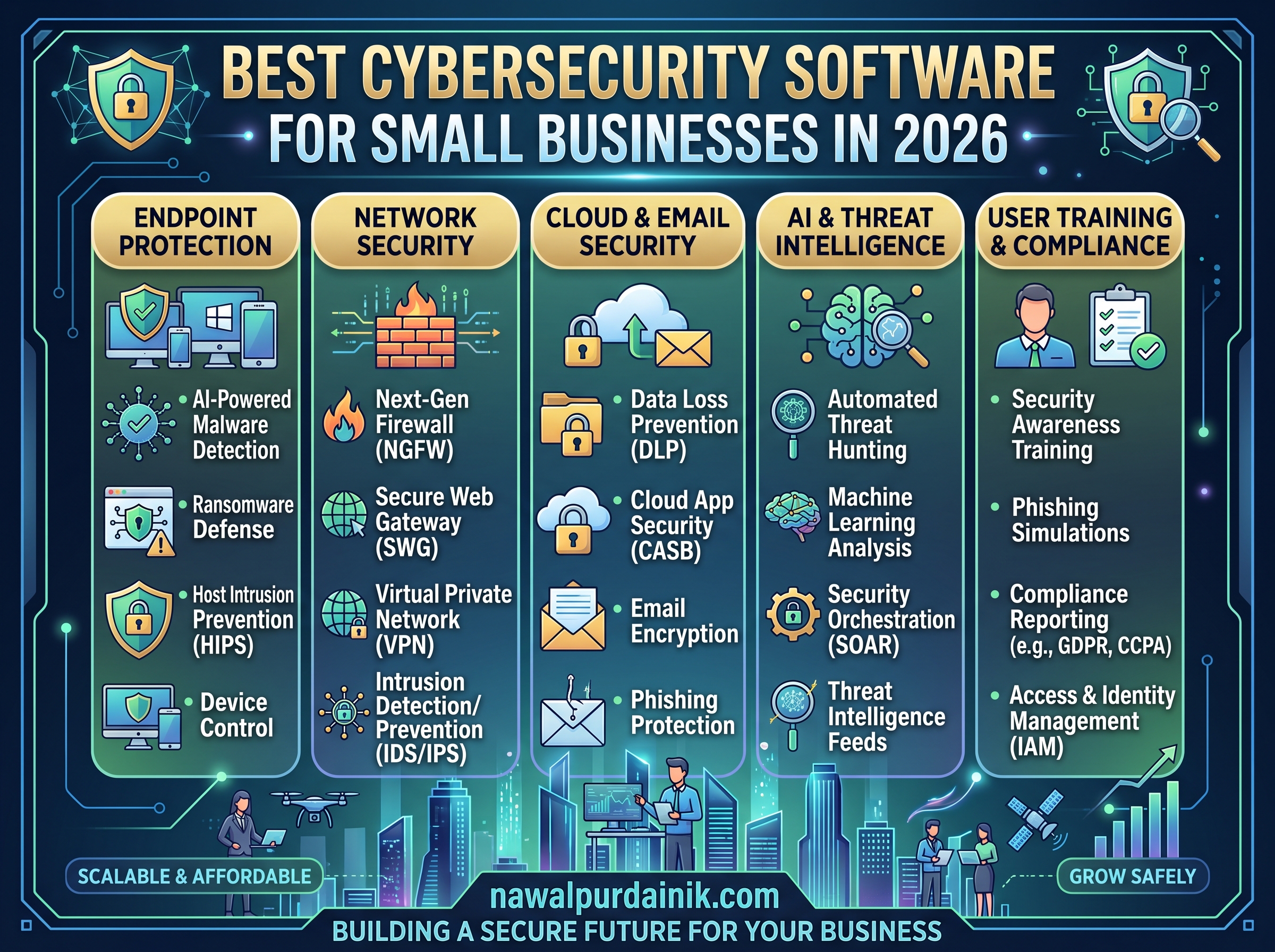
Key Features: Automated threat hunting, USB device control, and an incredibly lightweight agent that won’t slow down older hardware.
-
Best For: Remote or hybrid teams where employees connect from various unsecured home networks.
-
Pricing: Around $4 to $5 per device, per month.
2. Best for Web & Domain Protection: Cloudflare (Pro/Business Tiers)
If your business relies on a public-facing website, e-commerce platform, or a portfolio of monetized web domains, protecting your web traffic is paramount. Any downtime or malicious bot traffic can destroy your site’s reputation and severely degrade your ad monetization metrics.
Why it wins: Cloudflare acts as a massive shield sitting between your website and the rest of the internet. It provides a world-class Web Application Firewall (WAF) and DDoS protection that absorbs malicious traffic before it ever hits your host server.
-
Key Features: Global Content Delivery Network (CDN) for faster load times, advanced bot management (crucial for maintaining pure traffic for ad networks), and secure DNS routing.
-
Best For: Digital publishers, e-commerce sites, and businesses heavily invested in web development and domain management.
-
Pricing: The Pro plan starts at around $25 per month, which easily pays for itself by preventing costly downtime.
3. Best for Cloud Infrastructure & Collaboration: Microsoft Defender for Business
If your small business operates entirely within the Microsoft 365 ecosystem (Teams, SharePoint, Outlook), trying to bolt on third-party security can create unnecessary friction.
Why it wins: Microsoft Defender for Business is seamlessly integrated into the M365 environment. It offers enterprise-grade cross-platform protection (Windows, macOS, iOS, Android) and excels at protecting cloud data environments.
-
Key Features: Next-generation antivirus, endpoint detection and response, automated investigation and remediation, and robust anti-phishing protocols for email.
-
Best For: Companies already utilizing Microsoft’s cloud platforms for their daily operations.
-
Pricing: Included in Microsoft 365 Business Premium ($22/user/month), or available as a standalone product for about $3/user/month.
4. Best for Identity and Access Management (IAM): Duo Security (by Cisco)
Passwords alone are effectively useless in 2026. Multi-Factor Authentication (MFA) is the absolute bare minimum requirement for securing any business application, domain registry, or financial account.
Why it wins: Duo Security is incredibly user-friendly. It secures user logins across all your critical applications without frustrating your team. It also allows you to set conditional access policies—for example, blocking login attempts from certain countries or requiring device health checks before granting access.
-
Key Features: Push notifications for easy MFA, Single Sign-On (SSO) for centralized access, and device trust policies.
-
Best For: Any business that uses multiple SaaS applications and wants to prevent credential-stuffing attacks.
-
Pricing: Starts with a robust free tier for very small teams, with paid plans offering advanced access controls starting around $3/user/month.
5. Best for Network Security & Firewalls: Perimeter 81 (Check Point)
The traditional office network is fading, replaced by distributed teams accessing cloud resources from anywhere. A traditional hardware firewall sitting in a dusty server room doesn’t protect a remote worker sitting in a coffee shop.
Why it wins: Perimeter 81 provides Zero Trust Network Access (ZTNA) and functions as a Firewall-as-a-Service (FWaaS). It essentially creates a secure, encrypted perimeter around your employees and your cloud assets, regardless of their physical location.
-
Key Features: Secure web gateways, zero-trust application access, and seamless integration with major cloud providers (AWS, Google Cloud, Azure).
-
Best For: Fully remote companies that manage sensitive databases or custom cloud infrastructure.
-
Pricing: Starts at roughly $8/user/month plus a gateway fee.
How to Choose the Right Cybersecurity Stack
Building your defense doesn’t mean buying one of everything. For the best return on investment and minimal operational bloat, follow this blueprint:
-
Start with Identity: Implement Duo Security (or Google/Microsoft authenticators) across every account. Lock down your domain registrars, hosting platforms, and financial software first.
-
Secure the Endpoints: Deploy a modern EDR like CrowdStrike or Bitdefender on every company device.
-
Protect the Perimeter: If you host a website, put it behind Cloudflare. If you have remote workers accessing internal databases, look into Zero Trust networks like Perimeter 81.
Final Thoughts
In 2026, cybersecurity is not just about preventing disaster; it is about ensuring business continuity. When your cloud infrastructure is locked down, your domains are shielded from attacks, and your endpoints are monitored, you can focus on what actually matters: scaling your business, optimizing your revenue streams, and maintaining the trust of your customers.