Understanding 5G Technology: What It Means for the Future of Connectivity
The world is moving quickly, and so is the internet. With the introduction of 5G technology around the world, we are stepping into a new era of connection that promises to be faster, more dependable, and able to support technologies we could only imagine a few years ago.But what exactly is 5G, and why is it getting so much attention?
What Is 5G?
5G stands for the fifth generation of mobile network technology.
It is the next big thing after 4G LTE and offers much faster data speeds, less delay in sending and receiving data, and the ability to connect a huge number of devices at the same time.While 4G allowed for smooth video streaming and quick app downloads, 5G takes things to a whole new level, with speeds up to 100 times faster than what 4G can offer.
Key Features of 5G
One of the most impressive parts of 5G is its ultra-low delay, which is how quickly data moves between devices.
With 5G, this delay can be as low as a few milliseconds, making real-time activities like online gaming, video calls, and even performing surgery from far away more possible than ever before.
Another big feature is its ability to support a huge number of connected devices.
This is important for the growth of the Internet of Things (IoT), where billions of devices—from smart fridges to industrial sensors—need to talk to each other smoothly and without problems.
How 5G Will Impact Different Industries
Healthcare: With 5G’s low delay, doctors could perform surgeries from thousands of miles away using robotic arms.
Telemedicine will also improve, allowing high-quality video visits even in faraway areas.
Transportation: Self-driving cars need to process data in real time.
5G’s speed and reliability will help these cars talk to each other and to traffic systems, making driving without a human safer and more efficient.
Entertainment: Watching 4K and even 8K videos without waiting for them to load will become the standard.
Augmented reality (AR) and virtual reality (VR) will also feel more realistic and enjoyable.
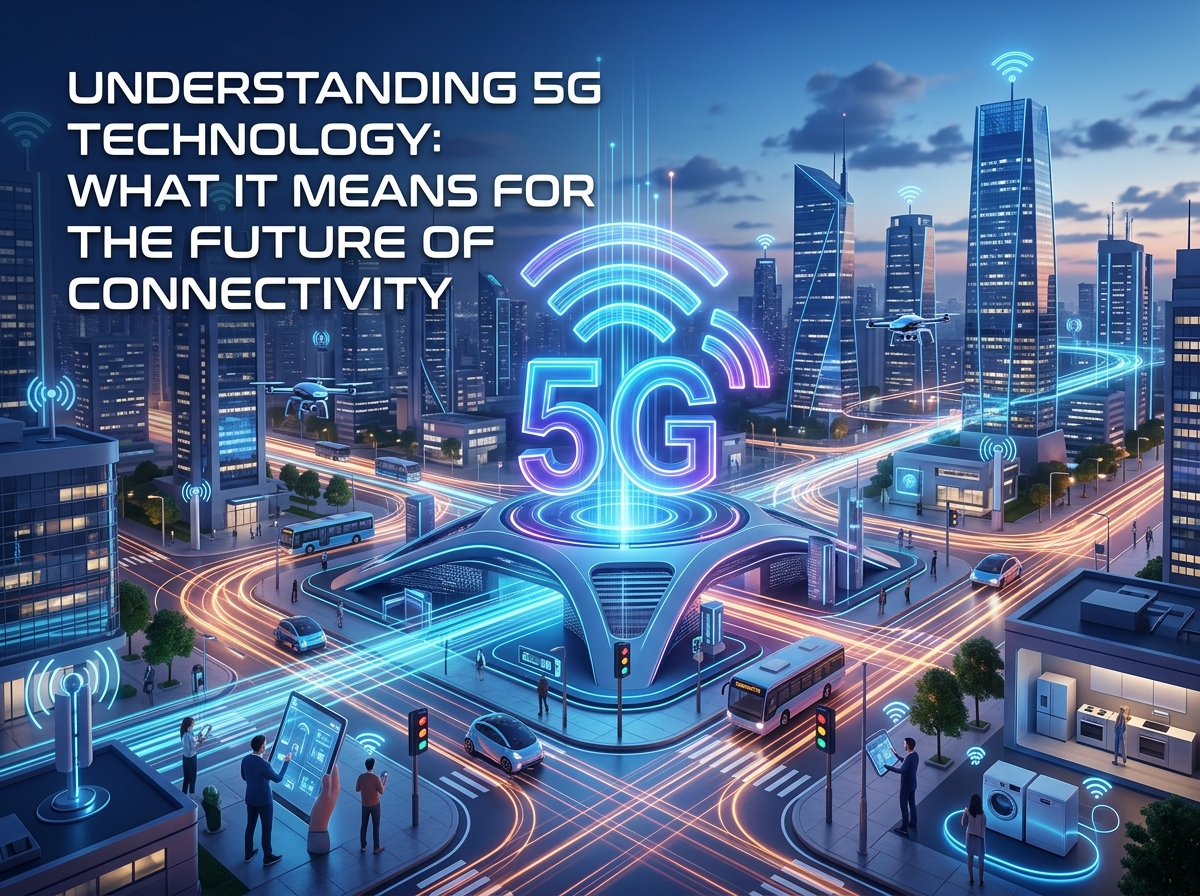
Smart Cities: 5G will power city systems like traffic lights, energy distribution, and safety networks, making cities more efficient and better for the environment.
Challenges of 5G Implementation
Even though 5G has many benefits, there are some difficulties in getting it up and running.
It needs a big investment in new towers and equipment.Also, there are worries about security and privacy, as more connected devices could give hackers more chances to attack.
Is 5G Available Everywhere?
Right now, 5G is being introduced step by step in different places.
Major cities in developed countries already have 5G coverage, but rural and remote areas may take longer to get this technology because of the cost of building the necessary infrastructure.
Conclusion
5G technology is going to change how we connect, communicate, and use the digital world.
From faster downloads to helping develop groundbreaking tech like self-driving cars and remote surgeries, 5G is more than just an upgrade—it’s the base for future digital innovation.As more people start using it, we can expect to see even more new and meaningful uses of this powerful technology in the years to come.