The Human–AI Workplace in 2026: How Automation and Intelligent Agents Are Redefining Jobs
Presentation: A Modern Time of Work Has Arrived
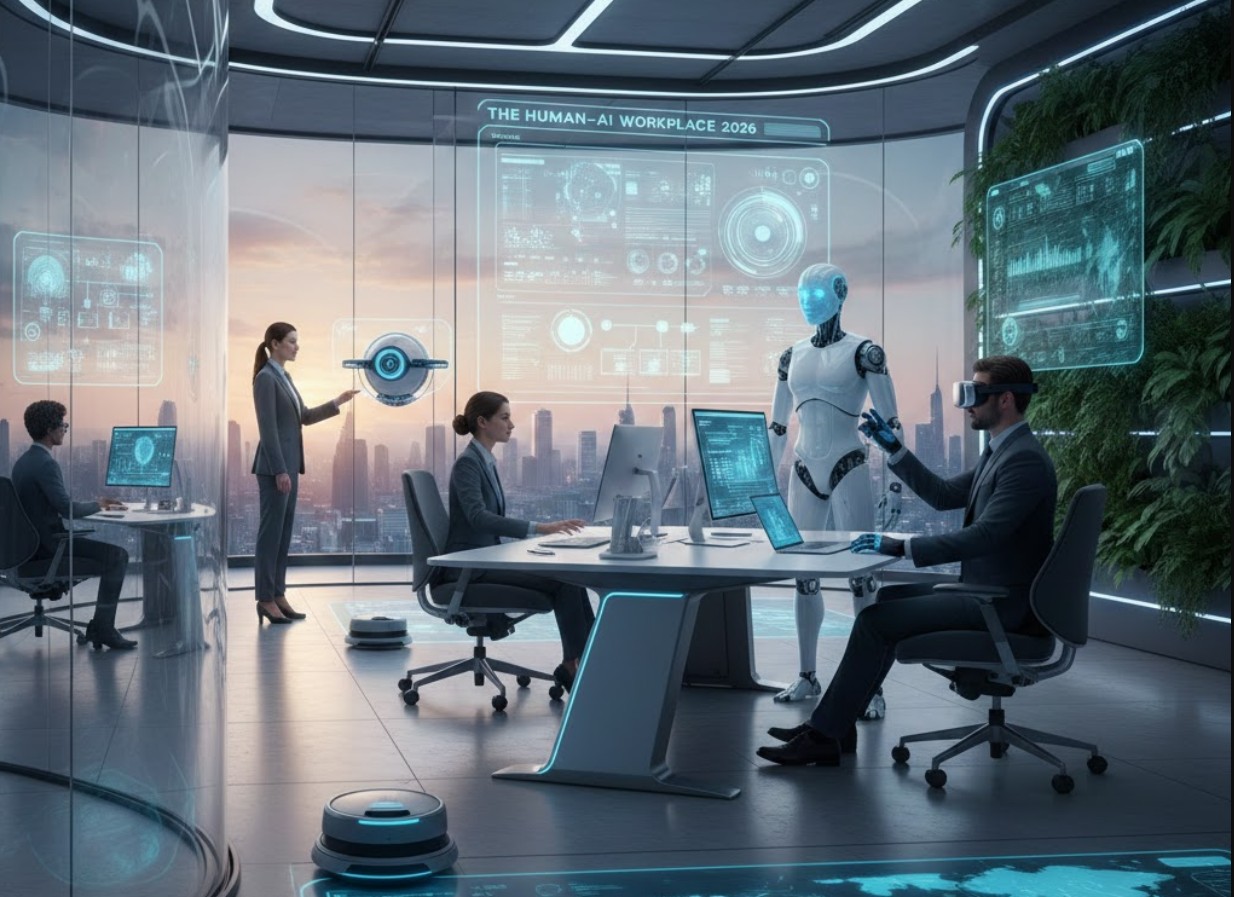
By 2026, the working environment has entered a transformational stage where people and counterfeit insights collaborate as co-workers or maybe than competitors. Computerization, once constrained to monotonous errands, has advanced into shrewdly operators competent of thinking, decision-making, and independent execution. From corporate workplaces to imaginative studios, the Human–AI work environment is reclassifying efficiency, work parts, and career paths.
This move is not approximately supplanting humans—it’s almost increasing human insights, opening productivity, and reshaping how esteem is made in the worldwide economy.
What Is the Human–AI Workplace?
The Human–AI work environment alludes to situations where AI-powered frameworks effectively collaborate with human workers. These frameworks include:
- Intelligent virtual agents
- Autonomous workflow managers
- AI copilots for composing, coding, plan, and analytics
- Robotic prepare computerization (RPA) upgraded with machine learning
Unlike prior mechanization waves, 2026 AI frameworks get it setting, learn persistently, and adjust to human preferences—making them genuine advanced colleagues.
The Rise of Cleverly Operators in 2026
One of the most troublesome strengths in the advanced working environment is the rise of shrewdly AI operators. These operators can:
- Schedule gatherings and oversee calendars autonomously
- Analyze expansive datasets and create commerce insights
- Execute multi-step errands over distinctive program tools
- Communicate with clients through normal language
Platforms created by companies like OpenAI, Microsoft, and Google are implanting AI specialists specifically into undertaking tools—turning efficiency program into proactive advanced workers.
Automation Is Reclassifying, Not Wrecking, Jobs
A major concern encompassing AI has continuously been work misfortune. In any case, information from 2026 appears a diverse reality: occupations are being overhauled, not eliminated.
Jobs Most Changed by AI
- Customer bolster → AI-assisted benefit specialists
- Marketing → AI-driven development strategists
- Finance → Prescient analytics advisors
- HR → Ability insights managers
AI presently handles dreary execution, whereas people center on methodology, inventiveness, morals, and passionate intelligence—skills machines still battle to replicate.
New Work Parts Developing in 2026
As mechanization quickens, totally unused career ways have emerged:
 AI Workflow Architect
Designs and optimizes human–AI collaboration systems.
Incite Design & AI Trainer
Specializes in directing AI behavior and fine-tuning outputs.
Computerized Morals Officer
Ensures AI frameworks adjust with lawful, moral, and social standards.
Human–Machine Interaction Designer
Improves ease of use and believe between representatives and AI agents.
These parts offer tall pay rates and solid work security, making them alluring in the advancing work market.
Productivity Picks up and Financial Impact
The Human–AI working environment has driven to exceptional efficiency growth:
- Businesses report 30–45% effectiveness gains
- Project timelines are contracting by weeks
- Decision-making is quicker and more data-driven
For undertakings, this interprets into lower operational costs and higher benefit margins—a key reason why AI-related working environment substance draws in high-ECPM promoting from SaaS, cloud, and endeavor innovation brands.
Skills That Matter Most in the AI Workplace
In 2026, victory is no longer approximately competing with AI—it’s around working nearby it.
High-Demand Skills:
- Critical considering and problem-solving
- AI education and information interpretation
- Creativity and innovation
- Emotional insights and leadership
- Ethical thinking and governance
Employees who persistently upskill are seeing speedier advancements and superior stipend than those who stand up to automation.
Challenges in the Human–AI Workplace
Despite its focal points, the AI-driven working environment presents unused challenges:
 Algorithmic Bias
Unchecked AI frameworks can fortify out of line practices.
Over-Automation
Excessive dependence on AI can diminish human oversight.
Workforce Inequality
Those without get to to AI aptitudes chance being cleared out behind.
To address these dangers, governments and organizations are contributing intensely in AI administration systems, reskilling programs, and advanced consideration initiatives.
The Part of Companies and Governments
By 2026, forward-thinking companies are embracing AI-first workforce methodologies, whereas governments are upgrading labor laws to reflect AI collaboration.
Key activities include:
- Mandatory AI straightforwardness policies
- AI ability preparing subsidies
- Ethical AI compliance standards
This facilitated exertion guarantees that AI-driven robotization benefits society as a entirety, not fair corporations.
What the Future Holds Past 2026
Looking ahead, the Human–AI work environment will proceed to evolve:
- AI operators will arrange, arrange, and collaborate autonomously
- Hybrid groups of people and machines will gotten to be the norm
- Lifelong learning will supplant conventional career ladders
Rather than a danger, AI is getting to be the most capable career quickening agent of the present day era.
Conclusion: People and AI, More grounded Together
The Human–AI work environment in 2026 marks a notable move in how we work, make, and improve. Robotization and cleverly operators are not taking jobs—they are changing them into higher-value, more important parts.